

Brand official website · Smart electric vehicle
The client is a smart EV company listed on an overseas exchange, headquartered in the Middle East, w...
View Details →SZ00 · INTAKE
The first screen of a distributor site is not a carousel and not “partnering for the future”. It is the header of a sheet: number, categories served, industries covered, response commitment. An electrical engineer lands with one task — match the load in hand to a model. The cover takes the enquiry in; it does not wave.
Fig. 01 · a permanent-magnet synchronous motor render from the carried lines

The biggest trust cost for a distributor is the suspicion of grey stock. The design puts the answer before the products: a single-line diagram, three nodes — vendor, channel, end user. The vendor sits upstream like a source; the channel node is highlighted and carries scope and year; the end user is the OEM builder. One pass along the line beats ten pages of “integrity”.

The channel earns its margin at both ends: the vendor reaches thousands of OEMs through it, and the builder gets goods, sizing and repair through it — Fig. 02
The eight product categories are not a row of tabs. They become eight shelf drawers, each saying three things: what load the category serves, which series are kept on hand, and availability. Parameters stay on detail pages; the home page only has to walk the engineer to the right drawer.
Fans and pumps, general loads, high-protection fitting
On handElectronic cams, flying shear, high-dynamics positioning
On handSmall to mid controllers with remote expansion
On handSame family as the PLC; swap on the line without a stop
OrderedTouch and text panels matched to cabinet cut-outs
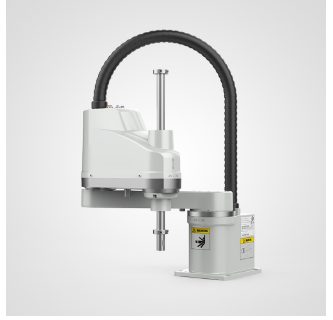
On handSCARA and six-axis, with external-axis references
OrderedMatched to the servo flange; inertia sized together
On handSensors, soft starters, Ex motors — quoted per sheet
Quote
Beyond the shelves sit the scenes: electronics, packaging, printing — every industry finds its load — Fig. 03
Electrical engineers quote part codes like identity numbers. The first screen of a product detail page becomes a decoder: a front photo on the left, the code broken segment by segment on the right — series, voltage, power, phases, one annotation each. The reader is walked through the code, not hit with a table.
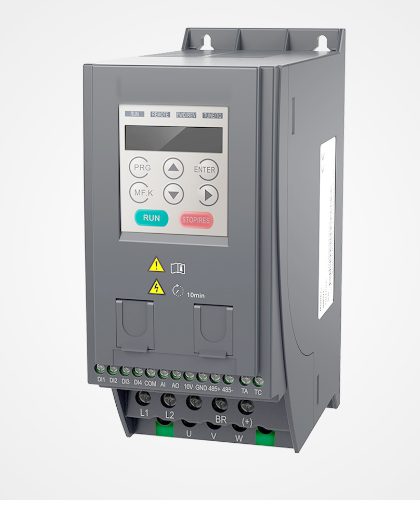
Fig. 04 · drive front: keypad, heatsink and terminal cover
FD500 · E series
On the live page each segment is an annotation. When something fails, the engineer reports by segment and the service desk picks parts by segment.
Sizing is the distributor’s core service, and most sites reduce it to a parameter download. Here it is a three-step bench: feed in the load, land on a series, add options. Each step shows its reasoning, so the engineer can check the maths.

The bench ends in a part number — enough to ask for stock or a quote — Fig. 05
Two series in one family: the parameter sheet gives no answer, the comparison does. Standard on the left, high-protection on the right, differing rows tinted. Below the table sits a row of stock lights: green for lines kept on hand, amber for lines pulled in with a lead time. The buyer’s question — “can I get it now” — needs no phone call.
| Item | FD500 standard | FD500 · E high-protection |
|---|---|---|
| Protection | IP20 · inside cabinet | IP54 · outside-cabinet mount |
| Overload | 120% / 60 s | 150% / 60 s |
| Brake unit | External option | Built-in |
| Keypad | Fixed | Detachable |
| Typical use | Fans and pumps | Tension and start-stop loads |
Stock lights · updated daily
Many OEMs arrive with an industry, not a category. The load map is laid out by industry: one row each, with the typical loads, the categories usually carried, and a reference image. An engineer works backwards from his own machine — three times faster than walking a catalogue.



“Fast response” is not a promise in this trade. The ledger splits it into checkable rows: repair channels, on-site times, parts lead times, warranty terms — each with a number. A stopped line costs real money; this is what the engineer actually reads.
07:30–22:00
Hotline and ticket, duty contact outside hours
< 30 min
Picked up by call or remote, on-site need judged first
< 4 h
Suzhou area; further sites scheduled within 24 h
48 h on hand
Stocked lines ship from the local store; others per vendor
18 months
Whole unit; misuse and out-of-spec duty assessed apart
Direct to vendor
Hard cases diagnosed with the vendor’s application engineer

Beyond the ledger, the process: hard cases are diagnosed jointly by channel and vendor — the channel earns its keep in service — Fig. 06
Certificate photos are unreadable on a phone; a register is checkable at a glance. Laid out as a ledger: brand, categories, authorisation level, start year, coverage — one row per brand. Originals stay for offline checks; online, the register is the reference.
| Brand(anonymised) | Categories | Level | Since | Coverage |
|---|---|---|---|---|
| Brand A | Drives · servos · PLCs · HMIs | Core distributor | 2015 | Suzhou area |
| Brand B | Collaborative robots | Authorised | 2021 | East China |
| Brand C | Special drive components | Authorised | 2022 | Per project |
The register follows each annual certificate cycle; “core distributor” is a vendor-side annual rating and any change is flagged at the top of the page.
The contact page is not “contact us”; it is “send the sheet”. Form fields mirror the sizing sheet: load, power, industry, lead time — the engineer fills in what is already on his desk, and sales receives a sheet ready to work. Contact details sit as ledger lines under the form, not as three icon cards.
ENQUIRY · SZ-____-__

A vendor site answers “what is our technology”. A distributor site answers three more practical questions: is the stock genuine, which model fits, and who fixes it. The buyer is an electrical engineer at an OEM with load figures in hand; what he lacks is a reliable channel and one sizing that does not go wrong. So the authorisation chain, the sizing bench, the stock lights and the service ledger come first — not the brand story.
Arrange by shelf, not by parameter. Eight categories become eight drawers, each saying three things: what load the category serves, which series are on hand, and availability. Parameters stay on detail pages; the home page walks the engineer to the right drawer. Sizing belongs to the bench and the decoder: three steps from load to model, and the part code read segment by segment — closer to how engineers actually read than any table.
One chain and one register. The chain is a single-line diagram — vendor, channel, end user, with the channel highlighted and carrying scope and year. The register is a ledger: brand, categories, level, start year, coverage, one row per brand. Certificate photos may take thumbnail spots, but the register is the body of proof.
Yes, wherever the value is “help me choose right, get the goods, fix it fast”. Swap the shelves for your categories, the decoder for your part-code segments, the three bench steps for your sizing logic, and the stock lights and ledger for your real lists and promises. The judgment is unchanged: ask what a buyer comes to do — check credentials, pick a model, ask stock, report a fault — and put those four things in order where the first screen can reach them.
MORE CASES
The client is a smart EV company listed on an overseas exchange, headquartered in the Middle East, w...
View Details →
A website for an authorised industrial-automation distributor: eight product categories of drives, s...
View Details →
An automotive-electronics equipment builder runs a six-section corporate site: About, Products &...
View Details →Start with our pricing logic, then let's talk requirements — cost structure, technology comparison and acceptance criteria, all laid out in the open.