

Brand official website · Smart electric vehicle
The client is a smart EV company listed on an overseas exchange, headquartered in the Middle East, w...
View Details →Line No. ASL-07 · Start here
The first screen carries no aerial photo of the plant and no slogan about craftsmanship. It carries a line: the number and destination of one production line on the left, the shop floor on the right. An equipment buyer comes in to do one thing — confirm that their part can become a module here. So the cover issues a job number; it does not wave hello.
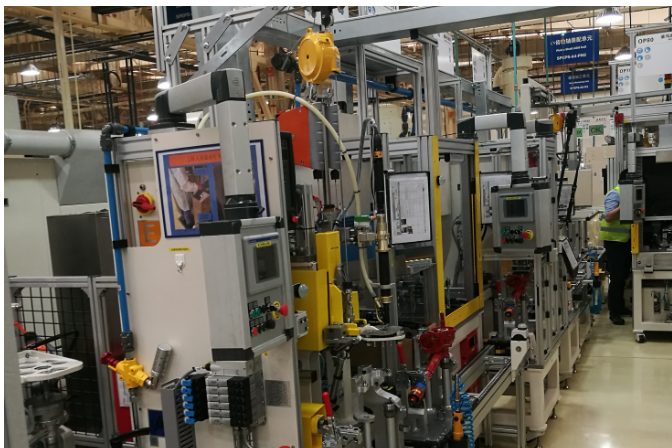
FIG. 01 · Shop floor: assembly and testing share one machine, stations laid out by takt

The three-level taxonomy is not left inside a dropdown to rot. It is laid out as three rail sections: first by vehicle domain, then by part type, then the actual line. Readers follow the rails; they never step back. The amber path is a sample: ADAS domain → in-car camera → surround-camera automated production segment.
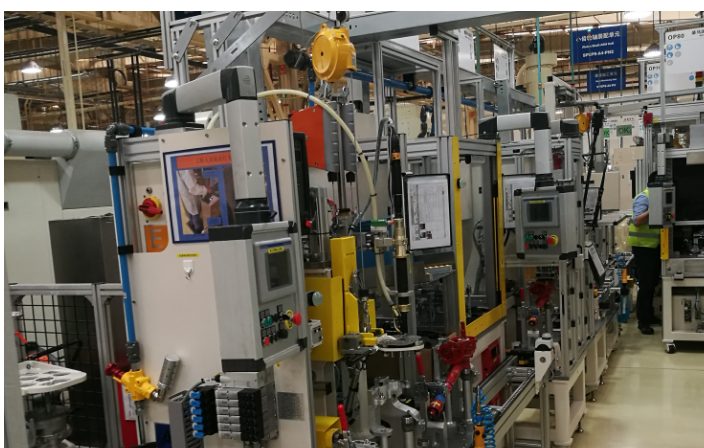
Gate exit · surround-camera segment
Assembly + dispensing + AA + leak test, end to end
On a marketing site the six support processes would be six identical icon cards. Here they are written as dictionary entries: each process gets a code, a definition, and the lines it appears on. A process engineer can tell from one entry whether this builder actually knows that step — harder evidence than any word like “experienced”.
OP-01
Fixing lens seats and filters, dosed by the milligram. The entry names three adhesive families and the dosing accuracy; it runs on the camera-module segment.
OP-02
FPC-to-connector pressing with force and depth logged cycle by cycle. Runs on the front-view module segment and the ECU assembly stations.
OP-03
Two families: laser welding and hot-rivet forming, for bracket riveting and housing closure on the integrated stations.
OP-04
Floating spindles with auto feed; torque curves archived screw by screw. Runs on module segments and the closure stations.
OP-05
Compression control of the seal that decides the leak class. Runs on the sealing station of the front-section ECU line.
OP-06
Four in-line checks: leak, AOL, AA and FCT. Test data returns to MES; rejects are stopped inside the station.

One process standard, from loading to shipping.
The most valuable block on a detail page is not the render; it is this top-view layout drawing: how twelve stations sit, where material enters, where the checks go. Beside it, the process chain spells out what each station does. Buyers lay their own routing against it and can see which stations could be shared.
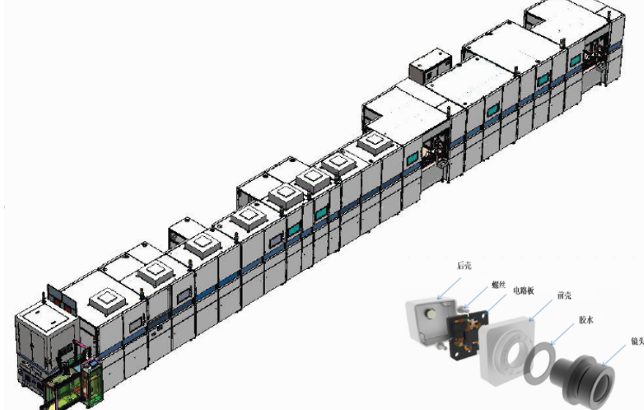
FIG. 02 · Surround-camera segment, top view (drawing anonymised)
Stations are laid out by takt; assembly and testing share machines; changeover time is written on the plate. Three trade-offs belong on the detail page:
Process chain, 12 stations · stations 03 and 11 share the name FCT: one check, run twice
Specs are usually two columns of grey text. Here they are hung as a nameplate on the line: rivets, a serial number, an acceptance field; parameters grouped by capacity, precision, test and check. When buyers copy numbers into an RFQ, they copy them off the plate.
“Founded 2005”, “18+ years”, “200+ lines” are usually three big numbers on white. This board sets them the way the board at the gate does: black, amber digits, status lamps, one caption per cell. The numbers are not honours; they are running status.
First machine shippedin production for 21 years
Years delivering linesacross three vehicle platforms
Lines in service46 currently being built
Stations on the sample linetakt 36s · first-pass yield 99.2%
In this industry certificates are not a trophy wall; they are admission tickets. The design showed three certificate images, but images carry company names and numbers, so the page reads them as register cards: name, scope, status. Above them, acceptance written as gates — FAT and SAT, each with conditions you can verify by eye.
The buyer comes in and runs the plate, item by item: takt, changeover time, two-stage leak, AA sampling. Signed off, the line is released.
The line re-runs 72 hours in the buyer’s hall; at target yield it moves to pre-acceptance, final sign-off after three months.
Four check stations across twelve; data archived per unit; rejects stopped in-station and never passed on.
The news section reads like a shift log: image left, text right, date first, one-line summary. Headlines state facts — a base opening, a line passing SAT, a remote changeover — not celebrations. What a buyer wants to know is whether the builder is moving; the log is the proof.
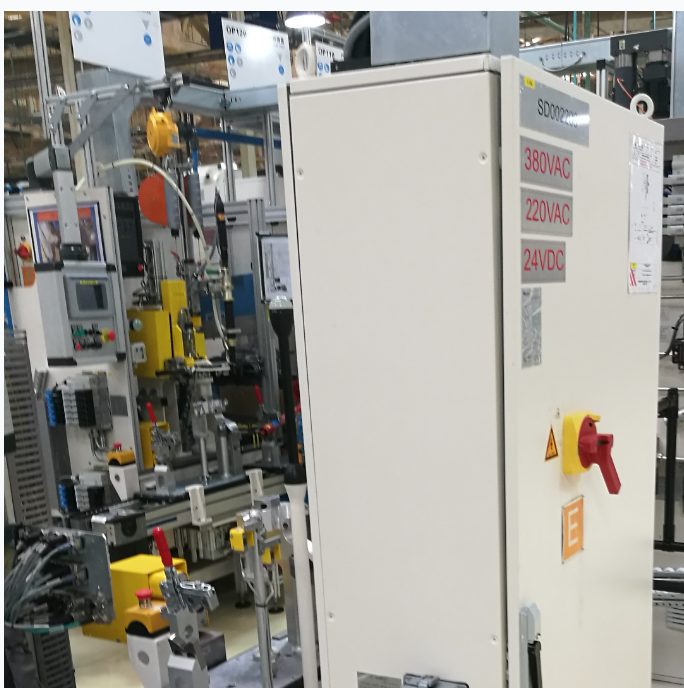
2022.12.21
From taking orders to being ready before them: capacity placed half a vehicle cycle ahead. Ground broken in July, two assembly-and-test lines running by December.
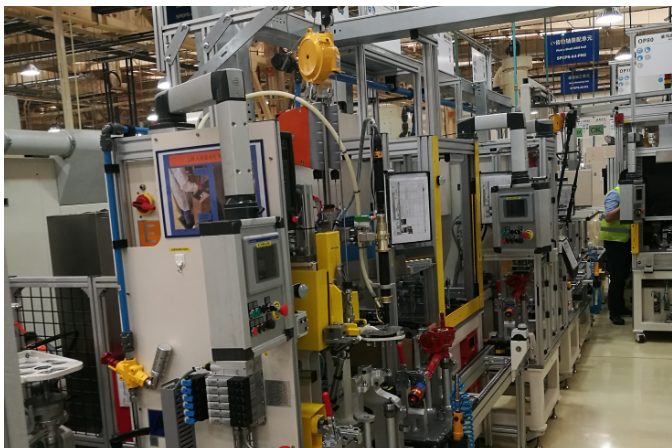
2022.11.08
72-hour re-run at 99.2% first-pass yield and a 36-second takt, eight percent inside contract. Pre-acceptance minutes signed.
2022.09.30
Two same-family products switched in 54 minutes without stopping the line. Parameters written back to MES as a standard work order.
Service & Support is laid out as a plan: response levels in hours, spares as a list, training as sessions. What the buyer is pricing is five-year cost of ownership — this section is where that gets calculated.
Careers stays plain: openings as cards, location, requirements and contract type on one line, an apply button on the right. The apply dialog is shown as a static mock — name, phone and CV, three fields a visitor understands at a glance.
APPLY WINDOW · MOCK
The live site uses a dialog form: three fields, submissions queue for HR screening. This is a static mock with no input fields.
The contact page is set as a packing list: the visitor fills their own project into the consignee fields, and sales takes it from there. Contact details are anonymised as placeholders.
PACKING LIST · LINE ASL-07
Conversion on an equipment site does not happen at the form; it happens after the process team has read the chain and the plate. So this section stays restrained: one list, six fields, no badge wall, no restated selling points.
FAQ
Because the buyer is not buying the machine; they are buying the line the machine belongs to. The purchase list reads “surround-camera assembly and test line”, not a model number. Sorted by model, twenty lines are twenty spec cards nobody remembers; organised by line, process, takt and acceptance are told once, and readers can still find their own part.
Treat the dropdown as a sorting gate. Level one answers “which domain does your part belong to”; level two, “which kind of sensor is it”; level three names the line. Each level answers one question, each gets a rail, and the reader follows the rail without stepping back.
With three things: a dictionary, a chain and a plate. The dictionary writes dispensing, pressing and welding as entries; the chain splits a line into twelve stations, each with its duty and check; the plate lists takt, precision and test pressure. The certificate wall is for outsiders; these three are for the review committee.
Yes, as long as what they sell is a process rather than a part. The tree can become moulding, stamping, SMT or packaging lines; the dictionary becomes their own process library; the chain runs as many stations as the real line has; the board reads founding year, lines delivered and work in hand. The judgement does not move: ask what the buyer will accept you on, and put that where they see it first.
MORE CASES
The client is a smart EV company listed on an overseas exchange, headquartered in the Middle East, w...
View Details →
A website for an authorised industrial-automation distributor: eight product categories of drives, s...
View Details →
An automotive-electronics equipment builder runs a six-section corporate site: About, Products &...
View Details →Start with our pricing logic, then let's talk requirements — cost structure, technology comparison and acceptance criteria, all laid out in the open.