
Brand official website · Smart electric vehicle
The client is a smart EV company listed on an overseas exchange, headquartered in the Middle East, w...
View Details →AR00 · 06:10 FIRST LIGHT
The first screen of a renewables site drifts towards a sunrise photo and one line about chasing the sun. This site does not: the first screen is about mounting systems — the skeleton of the modules. Buyers of mounting ask three things: where does it sit, how does it stand, how long does it stand. Three form-factor cards answer in front; materials and workmanship back them up; and “structural check against 25-year wind and snow loads” is written as one checkable line. The enquiries that come in carry roof photos and load reports.
Tilt set by latitude and irradiance season; aluminium-zinc-magnesium coating; 25-year structural warranty; adapts to complex terrain and agrivoltaic or fishery co-use.
Single-row multi-point drive follows the sun for 8–15% more energy; parks into protective posture in high wind and snow; algorithm optimises against both irradiance and tariff.
Prestressed cables span wastewater plants, reservoirs and complex fishponds at 20–40 m clear span; the space below stays in use — the answer to water with no pile positions.
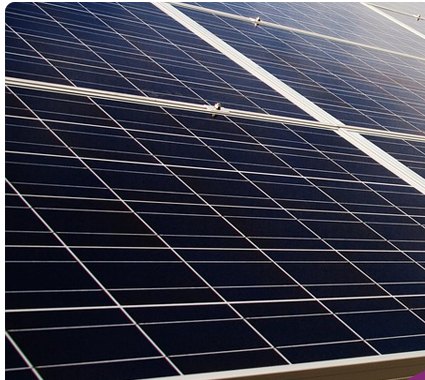
AR01 · 09:00 FORMING ARRAYS
Most sites lay modules out as a parameter table. This one lays them out as scenes: ground and mountain, fishery, C&I rooftop, building-integrated. Visitors recognise their own roof, pond or factory facade first, then read the mounting form, module orientation and return profile for that scene. Each scene opens with one plain sentence — “water with no pile positions”, “the factory roof earns while it covers”, “the facade is the power plant” — engineering language translated into owner language.
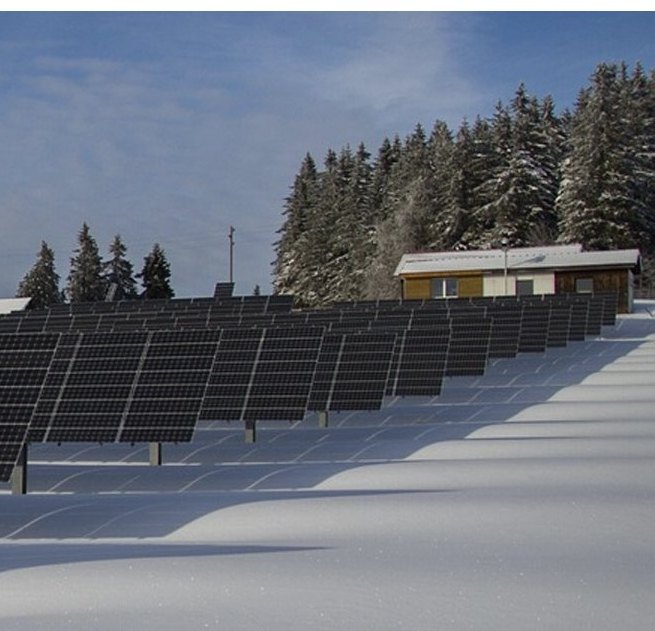



AR02 · 12:00 FULL OUTPUT
EPC is the “engineering” leg of the three businesses. The site does not stack certificate photos; it breaks one plant into six nodes, one deliverable each, so an owner can locate where their project stands and what the next step needs. That beats “full-process service” by a mile — when the process can be matched, the quote has an anchor.
AR03 · 12:40 FOOTPRINT
Most sites render “national presence” as one map with red dots. This one renders a capacity register: region, capacity, station count — 1.3 GW across 59 plants, each cell addable and pointable at. Project names and coordinates are anonymised to region and scale; the register survives being questioned, a map only looks good.
Register basis: grid-connected capacity and station counts summed by region; overseas counts plants under construction or in discussion. Specific project names and owners are withheld under anonymisation; a verifiable list is available in due diligence.
AR04 · 15:00 RETURNS
Investors do not come to read “strong and reliable”. The chapter gives three things: a simulated year-by-year energy curve across 25 years (first-year degradation plus a linear decline), three cooperation models with rights and duties, and one line of methodology. The numbers are negotiable; the model is laid on the table first — negotiating from a shared model beats “let’s talk some more”.
Fig. 02 · simulated yearly yield: first year at ****, degradation booked against the module warranty curve, about 84% after 25 years. Dashed line: degradation trend.
The client provides roof or land; the operator funds, builds and holds. The client pays a discounted tariff monthly and locks 25 years of price relief with zero capex.
Both parties fund a project company by share ratio and share the yield. The operator runs EPC and lifetime O&M; one transparent ledger.
The client owns the asset; the operator builds it and runs O&M long term. A generation commitment sits in the contract, with shortfall compensation.
AR05 · 16:30 THE RIDGE
A group site always carries a history. Most render a horizontal strip of years that scrolls past unread. This one renders a climbing timeline on a distant-ridge backdrop: from manufacturing in 2011, into renewables in 2020, to grid-source-load-storage integration — every step a climb, echoing the slope of the curve. Company and park names are anonymised; the events stay.
Founded as a manufacturer; trade and production run in parallel and lay the first base.
Into aluminium formwork and new materials; capacity takes shape; recognised as a scaled enterprise.
Chair-member of an industry quality alliance; products shipped into Southeast Asia.
Group structure reorganised; overseas partners joined; the smart-manufacturing line forms.
Three companies founded in one year; plant investment and mounting businesses start in parallel.
New-material and engineering companies merge into the group; the chain from component to plant is complete.
Smart storage and PV mounting lines land; several large projects connect; source–grid–load–storage integration breaks ground.
1.3 GW connected across 59 plants in operation; the curve climbs again every morning.
AR06 · 18:24 SUNDOWN
Most sites run out of story at sundown. This one cuts the whole page to a night palette at the sundown moment: the day’s energy sits in batteries until the evening peak. Telling the storage story at night proves more than telling it at noon — for a site without storage, the curve is a lie the moment the sun sets.
Independent storage plants trade peak-shaving and frequency services; capacity leasing and arbitrage carry the return.
Carport PV, batteries and chargers built as one site: stores light by day, serves charging at night, balances itself.
Commercial storage runs two charge–discharge cycles against the tariff curve; demand management trims capacity charges in the same pass.
AR07 · 20:00 NIGHT WATCH
O&M is the quiet line investors care about most: installation is only the start; 25 years of output curves are flattened by maintenance. The site writes O&M as four service commitments plus one digital dashboard — commitments that can be checked, a dashboard that can be visited. This night chapter is written for capital, and it is the sharpest line between an operator and a pure equipment vendor.
AR08 · 22:00 LIGHTS ON
Values sit at the end of the night chapters on purpose: the day is for business, the night is for principles. Each of the four values carries one line on what it means in this industry, not an empty slogan; the credential wall lists key recognitions as badge cards, with scans reserved for due diligence — what hangs on a wall matters less than what can be opened on a table.
AR09 · 07:00 SUNRISE AGAIN
After a full day the visitor is back at dawn — the narrative closes its loop and the enquiry page returns to daylight. Three base cards carry city and function, no street addresses (anonymised); the phone is a switchboard placeholder. The form takes four fields: role, scene, scale, intent. Clients who arrive with a roof photo usually say the scene in the first sentence.
Because everything a power-plant buyer cares about is a function of time: irradiance, yield, tariffs, payback — all ride on daylight. Laid out as a daylight curve, from first light to night watch, each business lands in its own moment: mounting catches the morning light, EPC peaks at noon, investment does the afternoon maths, storage and O&M take the night shift. Walking one day of light walks the life of a plant.
By delivery order and scale: mounting is a part, EPC is a project, investment is an asset. The site moves from one module to one array, one plant, one grid — each chapter larger than the last. A mounting buyer stops in the first two chapters; a plant builder stops at the chain; an owner with capital and a roof reads the ledger. Every chapter exits to the enquiry, but each enters by its own door.
As a register, not a map. Region, capacity and station count in three columns — each cell addable and pointable at — plus grid-connection years. A map looks lively but cannot be verified; a register survives being questioned. Specific project names are anonymised to region and scale.
Yes. After sundown is where an operator earns its keep: storage moves daytime energy into the evening peak; O&M keeps tomorrow’s curve as high as today’s. Giving three chapters to the night writes “we hold assets long and maintain them seriously” on our face — exactly the signal an investor looks for, and the sharpest difference from a pure equipment vendor.
MORE CASES
The client is a smart EV company listed on an overseas exchange, headquartered in the Middle East, w...
View Details →
A website for an authorised industrial-automation distributor: eight product categories of drives, s...
View Details →
An automotive-electronics equipment builder runs a six-section corporate site: About, Products &...
View Details →Start with our pricing logic, then let's talk requirements — cost structure, technology comparison and acceptance criteria, all laid out in the open.