






One contract, two tracks: money and work running in parallel

The hard part of engineering project management is not recording - it is reconciling: contract amounts must line up with receipts and payments, and site progress must line up with output value. This app splits one contract into two parallel tracks - the money track for signing, receipts, payments and vouchers, the work track for kickoff, progress, maintenance and completion - and the two tracks meet in the performance screen. The case walks through 16 selected screens out of 20, ordered as cockpit, dual rails, contract archive and performance merge.

Industry
Construction / engineering project management (contract delivery and cash flow)
System type
Mobile app (20 screens designed, 16 published)
Key design
Cockpit home · dual rails (money × work) · voucher-per-record · contract archive · performance merge
Our role
Information architecture, UI walkthrough, de-branding and asset delivery
20 screensDesign set covering cockpit, dual rails, archive and performance
16 screensPublished screens - one stop on the two tracks each
2 tracksMoney track / work track - sharing one contract's state
67 editsDe-branding: brand, project and institution names, staff names, contract scans

One contract, two tracks

Once a contract is signed it runs on two rails at once: the money rail moves receipt by receipt on milestones, the work rail moves day by day on progress. The rails never block each other, yet they share one contract archive - every action on one rail becomes a record the other rail can see. At the end, both rails merge into the performance screen.

TRACK A · MONEY TRACK B · WORK Sign & file Receipt Payment Invoice Kickoff Progress Maintain Complete Performance One contract archive

Cockpit first: every contract on one screen

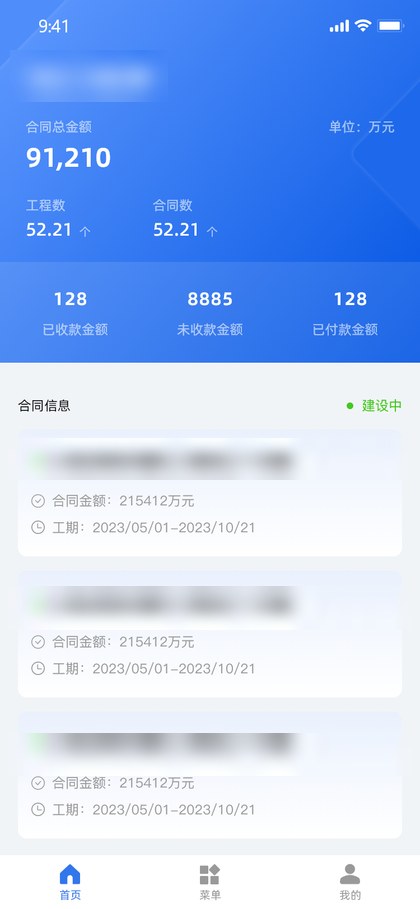
Fixing [scattered]: output value, receipts and payments, project and contract counts in one banner

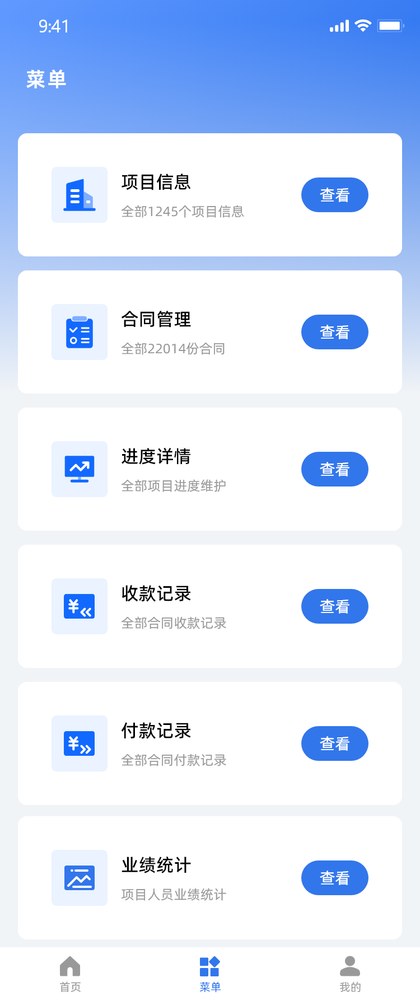
The app opens on a cockpit, not a list: cumulative output value, project count, contract count and three big figures - received, outstanding, paid - share one banner, while contract cards below roll through active projects with amounts and schedules. The menu page lines up six frequent entries - project info, contracts, progress, receipts, payments, performance - so each rail is one tap away.

Cockpit home: cumulative output value and three cash-flow figures with contract cards
Cockpit home · value and cash flow
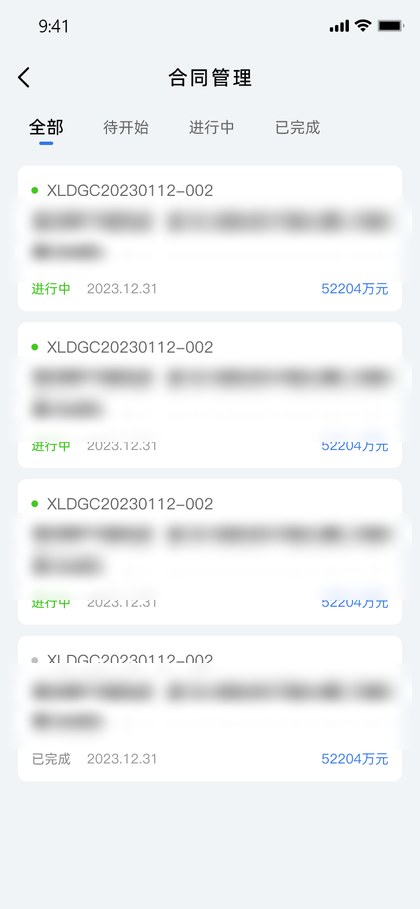
Contract list: all, pending, ongoing and completed status filters
Contracts · status filters
Menu page: six frequent entries from project info to performance
Menu · six entries

01 · Money track: every receipt and payment carries its vouchers

Fixing [reconciliation]: receipt and payment records, voucher upload, amounts and invoices pinned to one record

Receipts and payments each keep their own ledger: amount, date and handler one row at a time, ordered from signing to settlement. The payment and receipt info pages take voucher photos (up to 8), and the record detail pins amount, invoice, balance and notes together with the vouchers - when settlement turns into a dispute, that one record settles it.

Payment records: amount, date and handler one row at a time
Payment records · row by row
Receipt records: same structure as payment records
Receipt records · same ledger
Payment info: time, amount and voucher upload, up to 8 photos
Payment info · up to 8 vouchers
Receipt info: time, amount and voucher upload
Receipt info · same upload
Record detail: amount, invoice, balance and related vouchers
Record detail · amount and invoice

02 · Work track: progress and maintenance pinned to the same contract

Fixing [chasing]: completion time, output value, site photos and issue feedback per contract

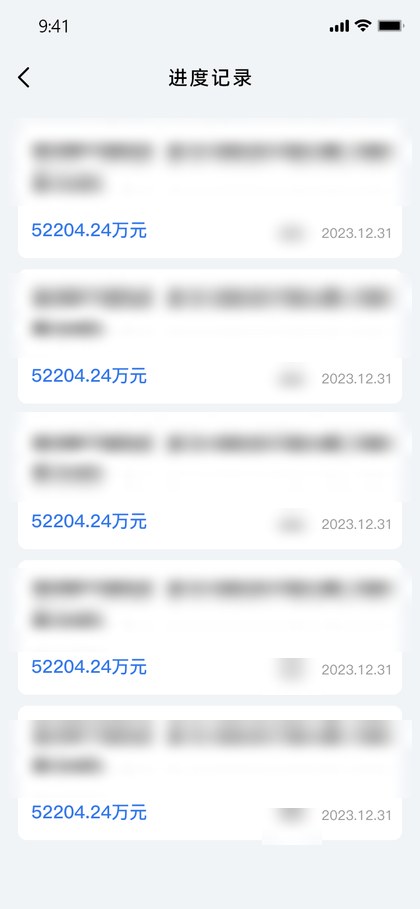
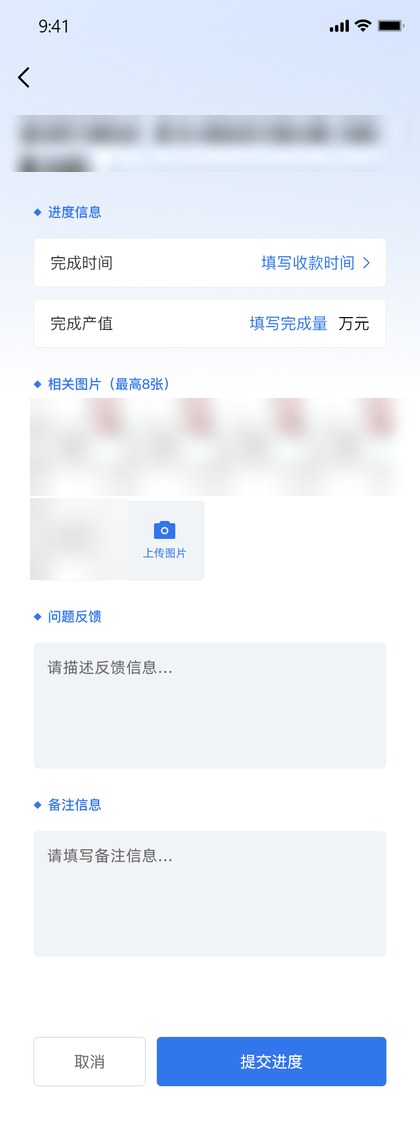
Progress records spread per contract: completion time and output value in one submission, and the value adds up into the performance screen's completed output. The maintenance page carries site photos (up to 8) and issue feedback; the maintenance record detail files the issue, the response and the vouchers together - every step on the work rail is visible from the money rail.

Progress records: output value and submission time per contract
Progress records · value per row
Maintenance page: completion time, output value, photos and issue feedback
Maintenance · value, photos, issues
Maintenance record detail: issue, response and related vouchers
Maintenance detail · issue and response

The contract archive: attachments, people and risks in one place

Fixing [looking things up]: basic info, staff, image attachments and all records in four tabs

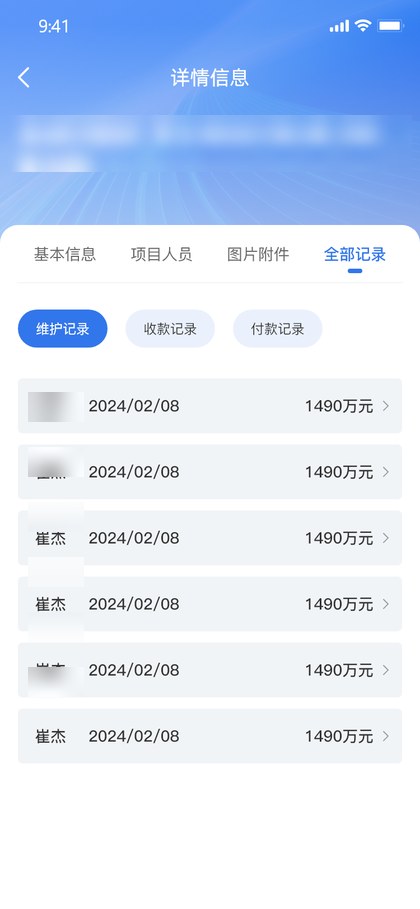
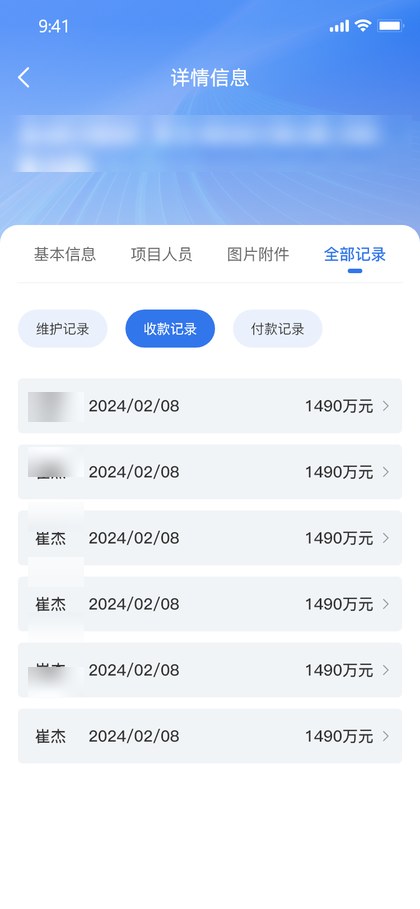
The contract detail page is the archive both rails share: basic info holds the parties, schedule and amounts with project risks listed at the bottom; staff splits owner-side and our-side contacts in two columns; image attachments keep contract originals and project documents; all records thread maintenance, receipts and payments into one flow. Wherever a rail stops, the archive has the backing file.

Contract basic info: parties, schedule, amounts and project risks
Basic info · parties and risks
Project staff: owner-side and our-side contact lists
Staff · owner and our side
Image attachments: contract originals and project documents
Attachments · originals on file

Performance merge: from single records to company results

Fixing [oversight]: receipts, payments and output value summed per company, drilled per contract

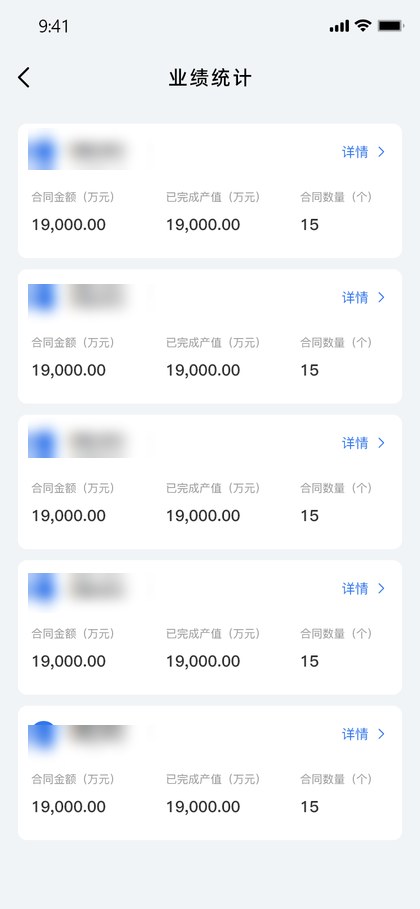
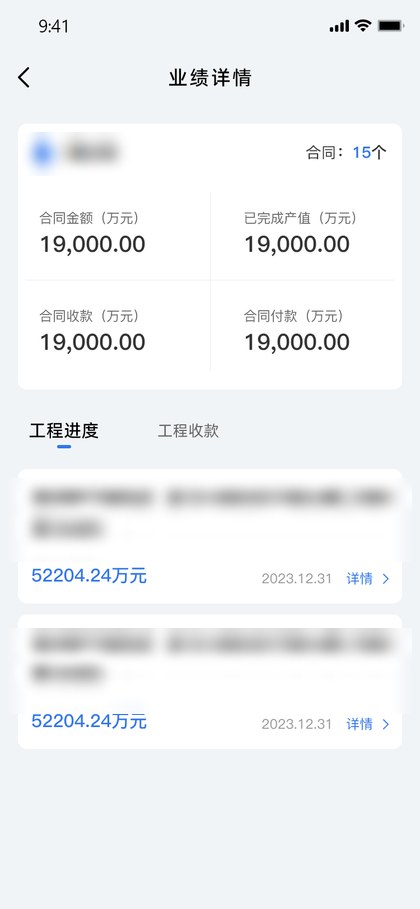
Every stop on both rails flows into performance: contract amount, completed output and cash flow summed per company, then drilled per contract through the progress and receipt tabs. Whether the money rail and the work rail line up is visible at one glance - the boss reads the merge point, the staff work the rails.

Performance statistics: contract amount, completed output and contract count per company
Performance · per company
Performance detail: drilled per contract through progress and receipt tabs
Detail · drilled to contracts

Peer Q&A

The four questions we hear most - two per rail.

Why split one contract into two tracks?

Money and work run on different rhythms: receipts follow milestones, progress follows days. With two rails, finance reads the money rail and the site reads the work rail without waiting on each other - and both rails share one contract archive, so a step forward on one is instantly visible on the other.
Why must vouchers ride with the record?

Receipts and payments never record bare numbers: the payment page requires vouchers (up to 8), and record detail pins amount, invoice and balance together with them. When settlement turns into a dispute, that one record settles it - reconciliation moved forward into recording.

How do you keep progress reports honest?

Reports carry value and photos: completion time and output value are required, site photos up to 8, issue feedback in its own block. The reported value adds up into the performance screen, so progress cannot be faked - every submission lands on the company screen.

Why does performance come last?

Because it is where the rails meet: receipts and payments from the money rail, output value from the work rail, summed per company and drilled per contract. The boss reads the merge point, the staff work the rails - one system, two readings.

MORE CASES

More Related Cases

Engineering contracts · one contract, two tracks
EC AppSmart construction site, project management

Engineering contracts · one contract, two tracks

The hard part of engineering project management is not recording - it is reconciling: contract amoun...

View Details →
Multi-brand app · one screen, three brands
EC AppElectronic manual, digital exhibition hall

Multi-brand app · one screen, three brands

A furniture group with three brands — Huangchao Yijia, Luchaokang and Boyit — has showrooms full o...

View Details →
Distribution mall · turning shoppers into distributors
EC AppDistribution Mall

Distribution mall · turning shoppers into distributors

The hard part of a distribution mall is not extra product pages — it is giving everyone who has bou...

View Details →

View All Cases →

Planning a similar production line or enterprise system?

Start with our pricing logic, then let's talk requirements — cost structure, technology comparison and acceptance criteria, all laid out in the open.